

When the system handles the routine, we are free to create, to teach, to produce and to grow.
Who Nayruz is
A music and arts school in Haifa with hundreds of students and instructors, teaching both Eastern and Western music. Its courses include, among others: violin, piano, guitar, voice, voice development, music theory, choirs and ensembles.
How they worked before
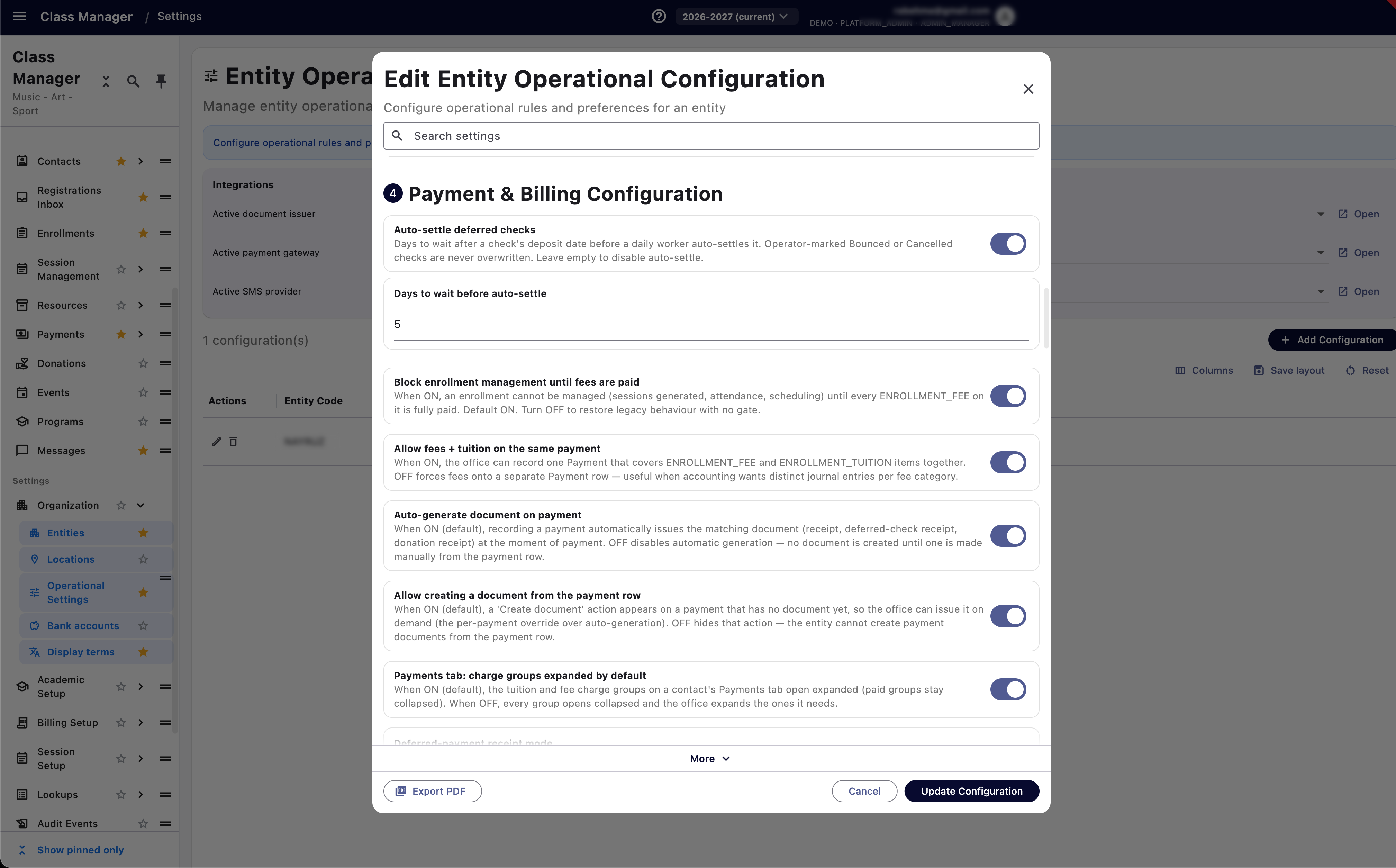
Paper binders, scattered Excel files and Google Sheets, WhatsApp, separate schedules and manual follow-up. Moving one lesson meant messages between the parent, the instructor and the office, and then editing the schedule by hand.
The challenges
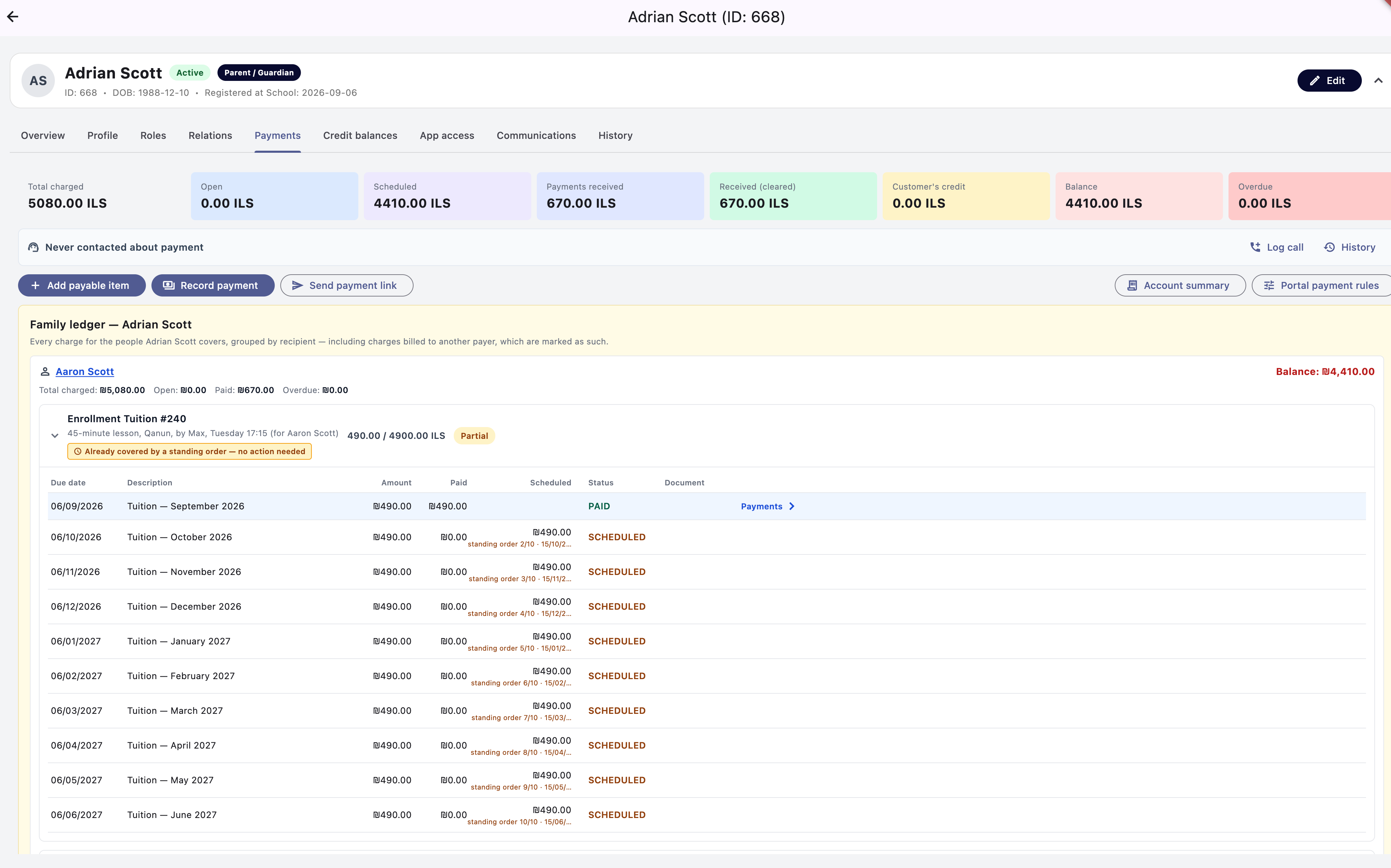
Payments, scheduling and managing lessons, and the link between them, were the hardest part, and the managers spent several hours on them every day. Packages, lessons, contracts, makeups and payments were linked by hand, across several sheets, documents and a separate receipt app. Collection was manual, with an external card terminal, and only at the office. To see what a family had paid, the office checked four or more places. Credits, refunds, and changes of rooms and lesson times were hard to track. Calls with parents were not recorded, and families could not see their charges or their lesson times, especially changes to lessons and how they affect makeups and payments.
How Maestro helped
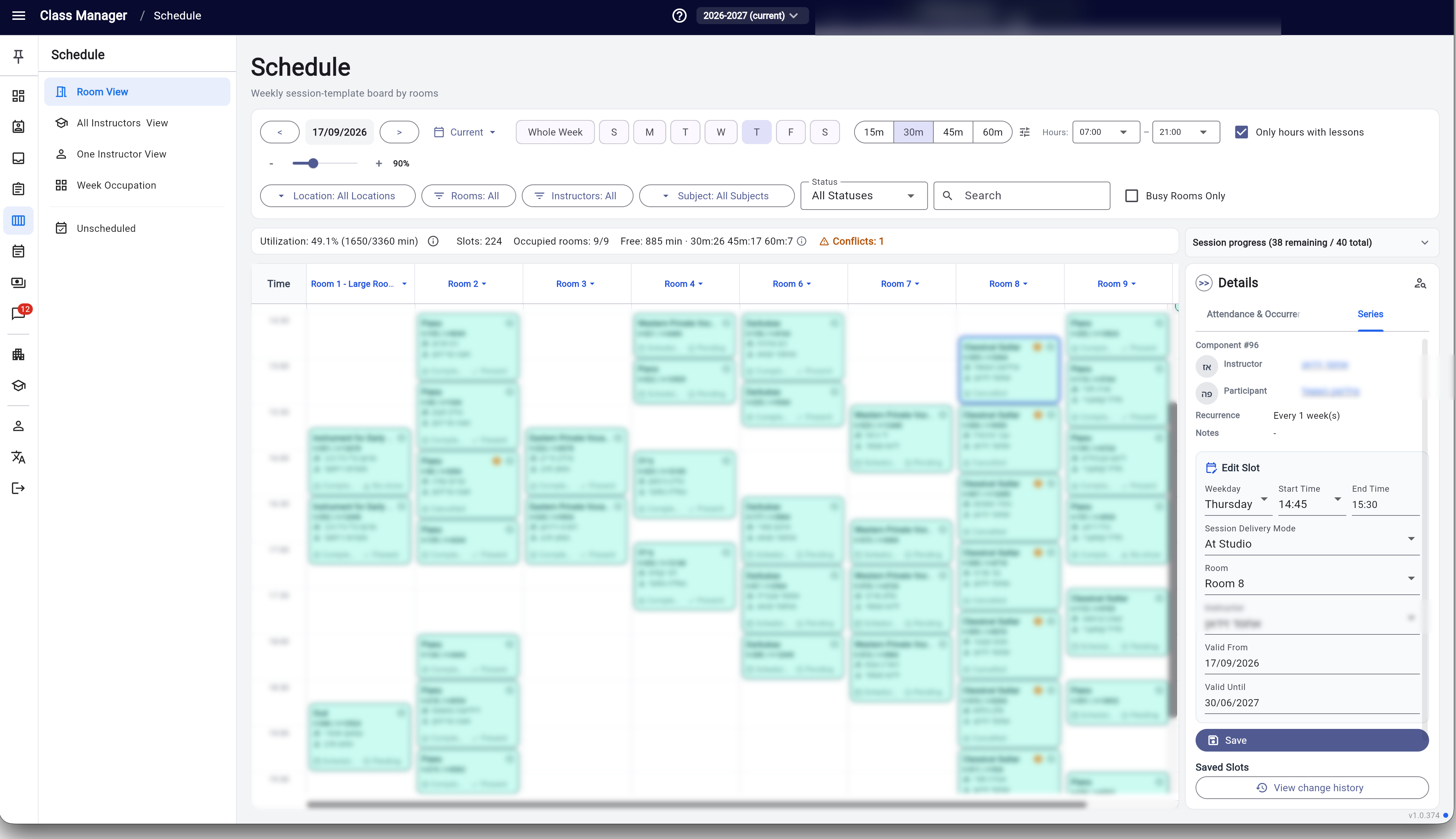
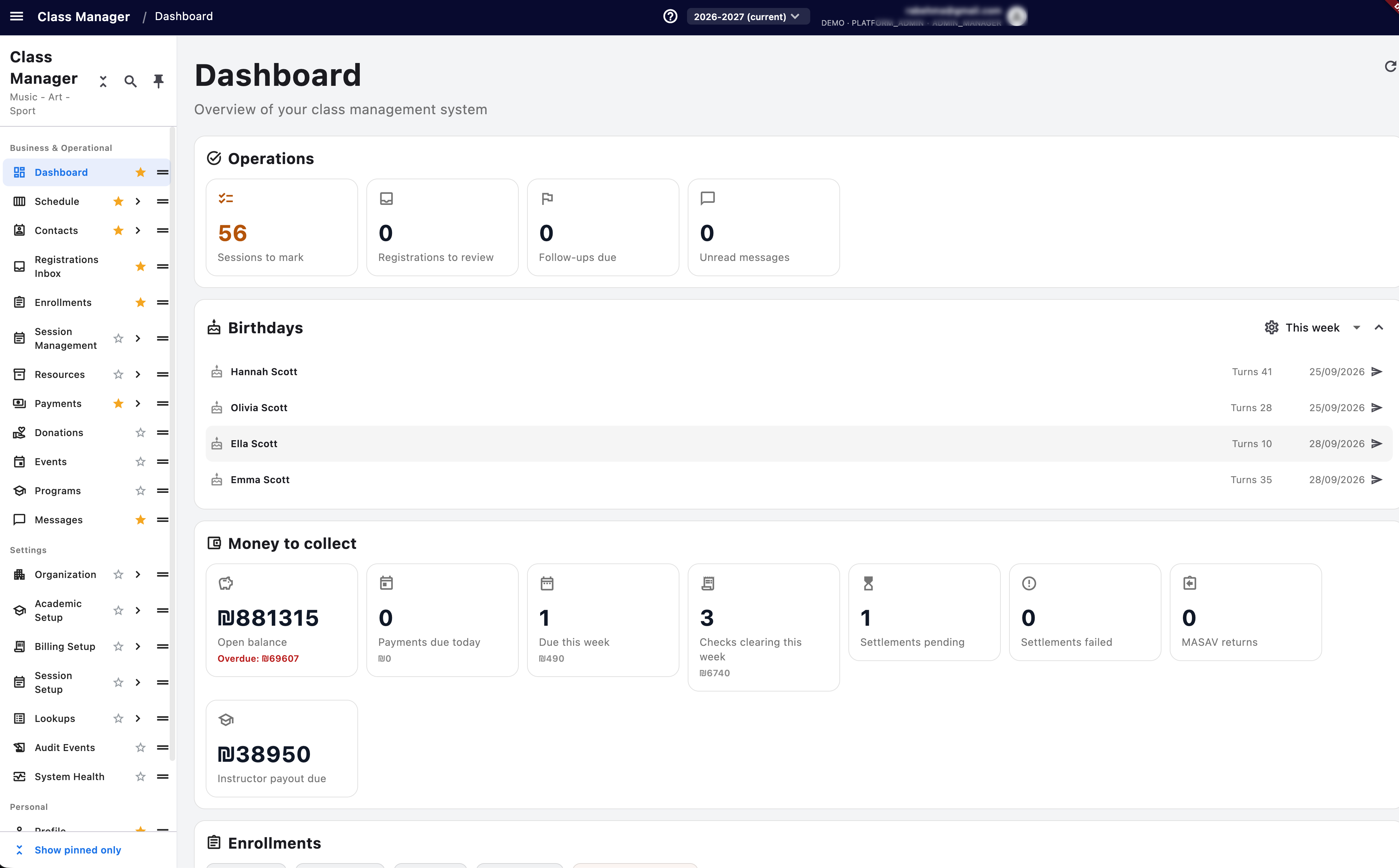
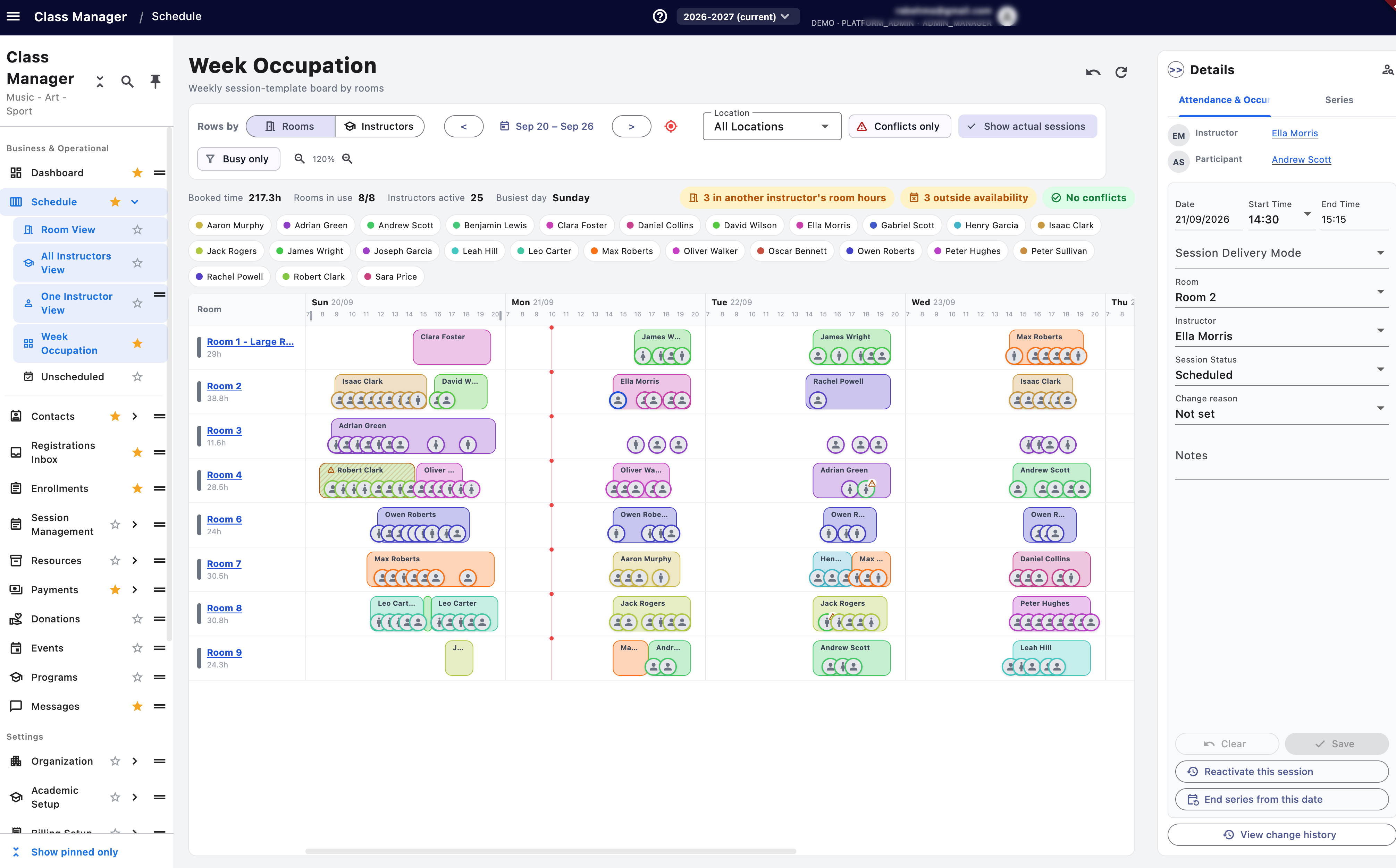
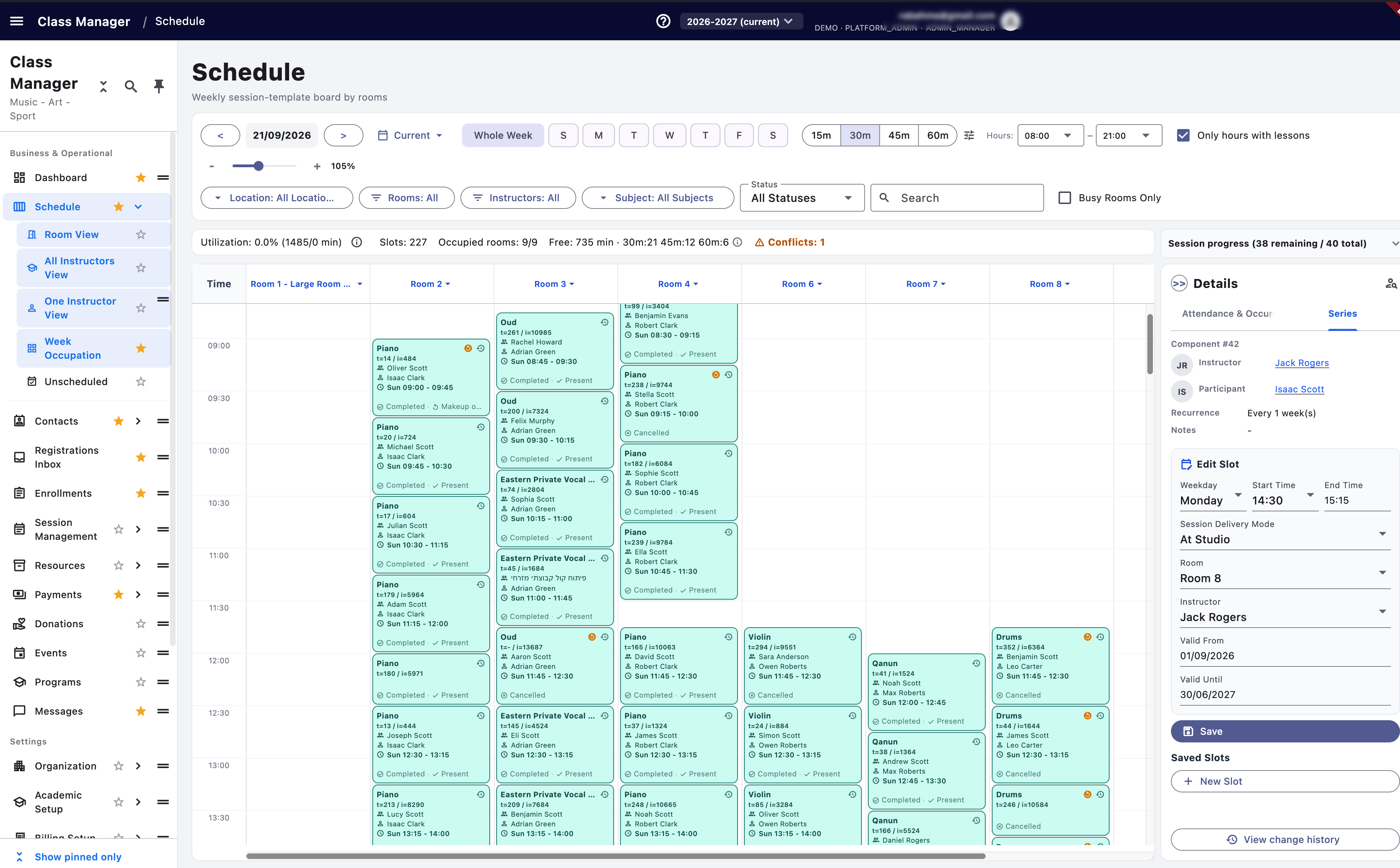
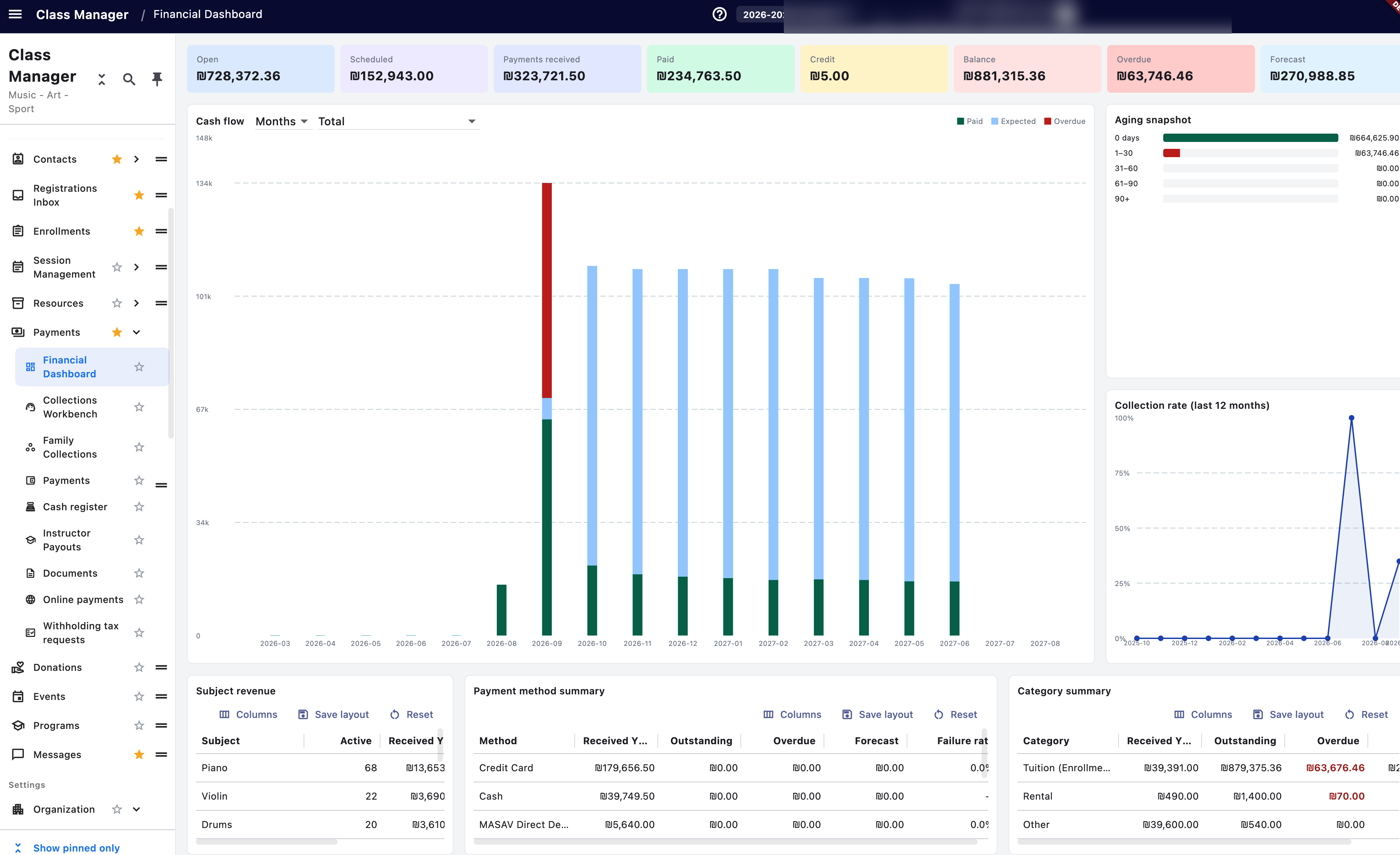
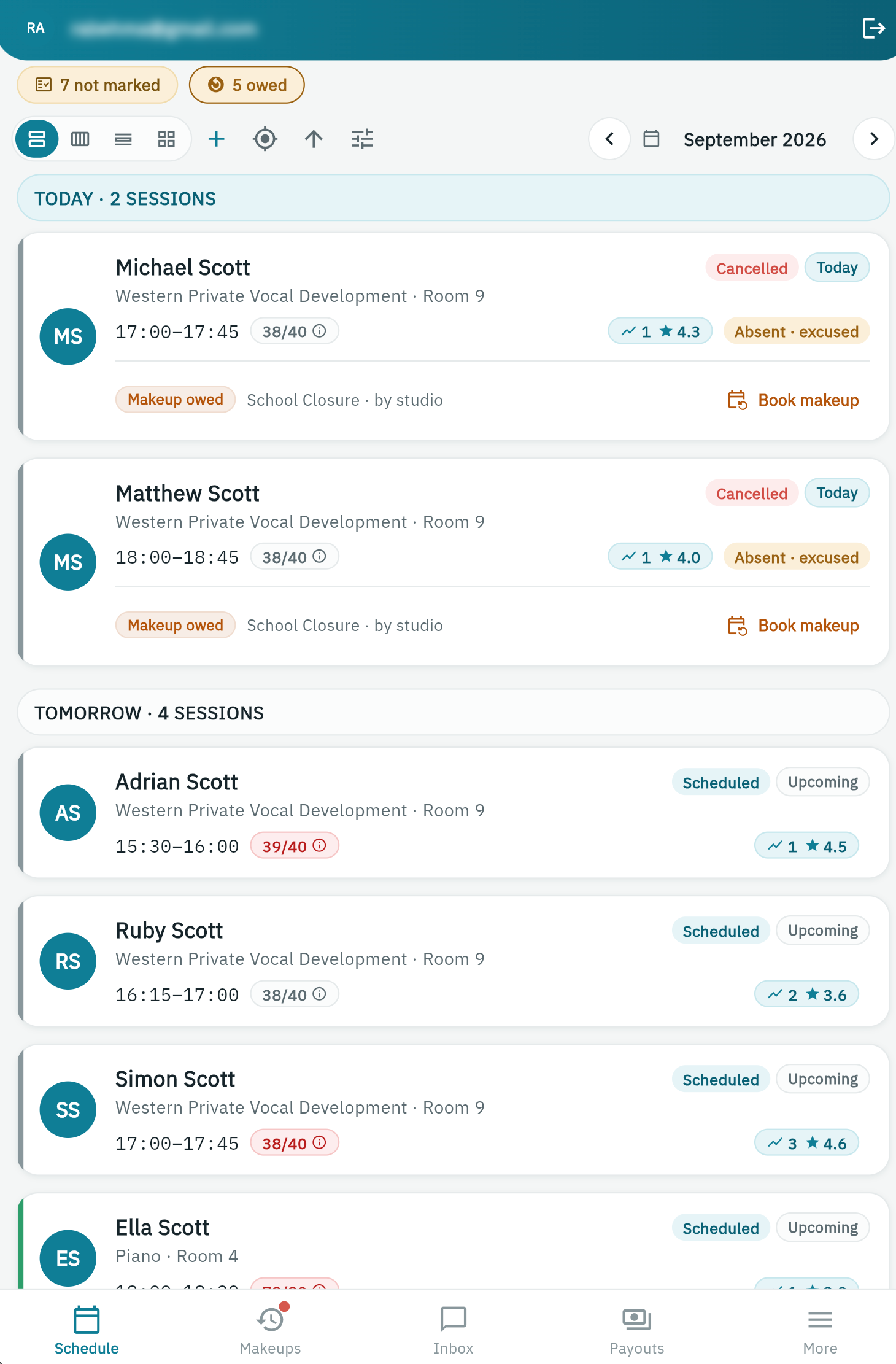
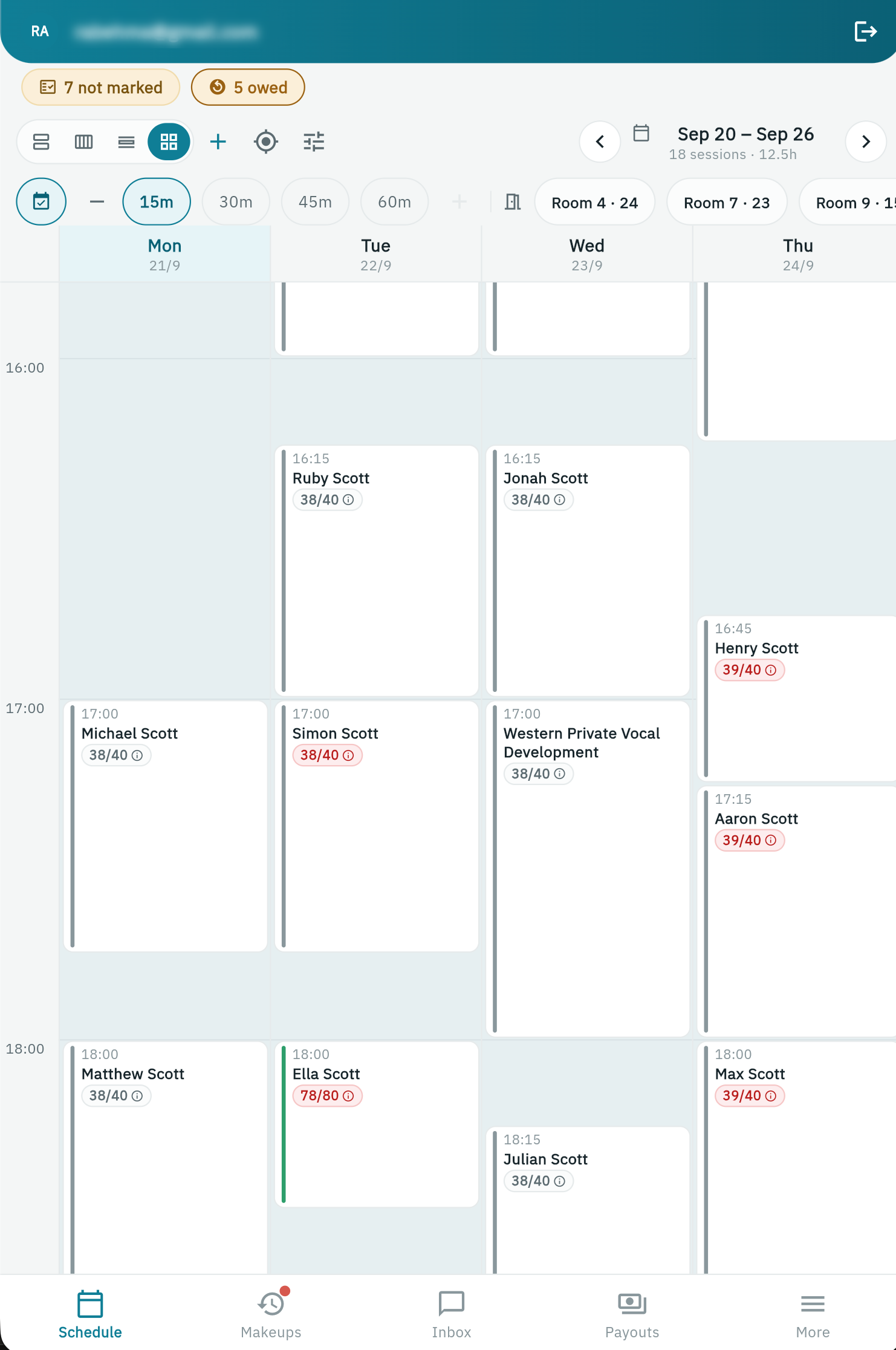
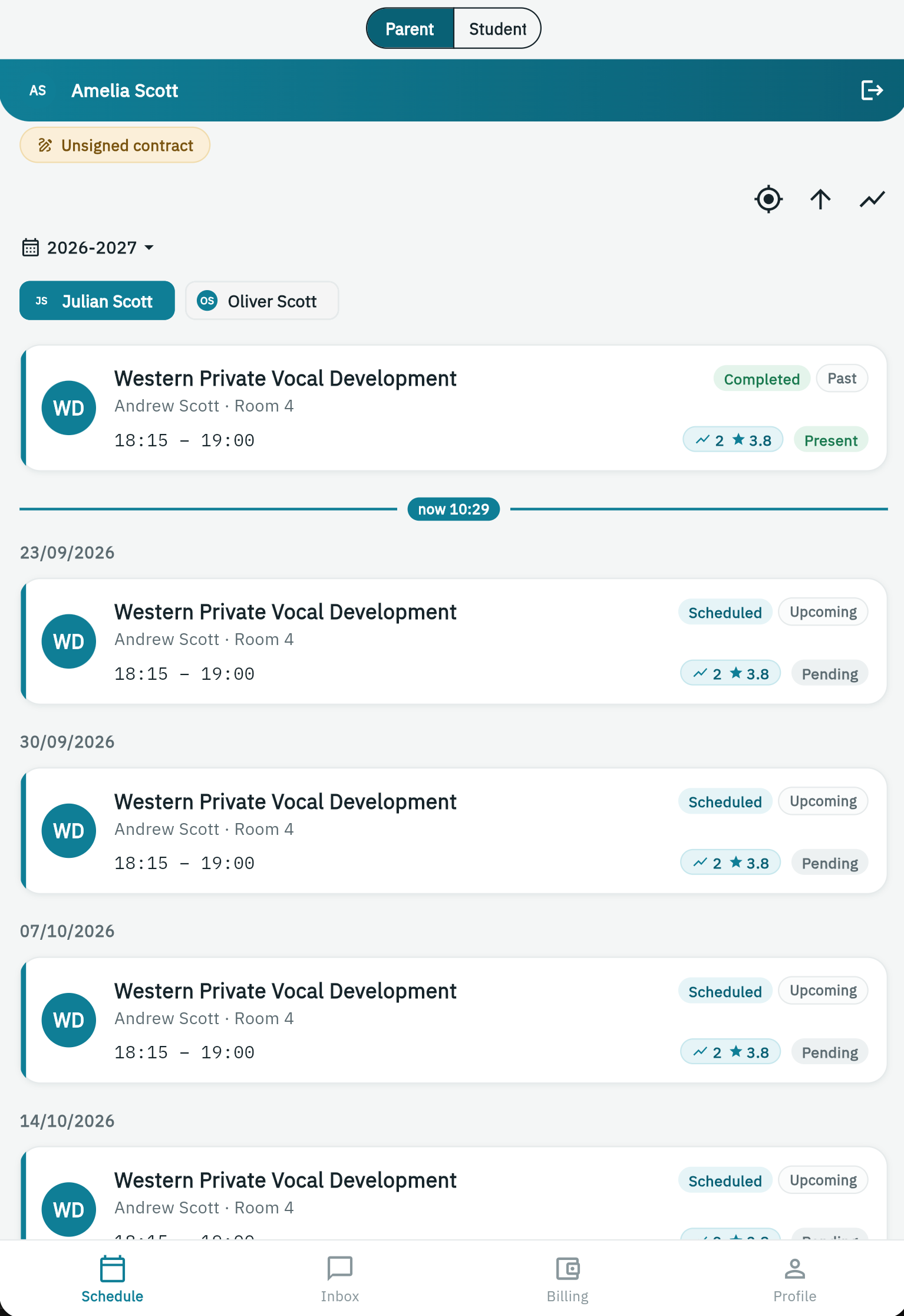
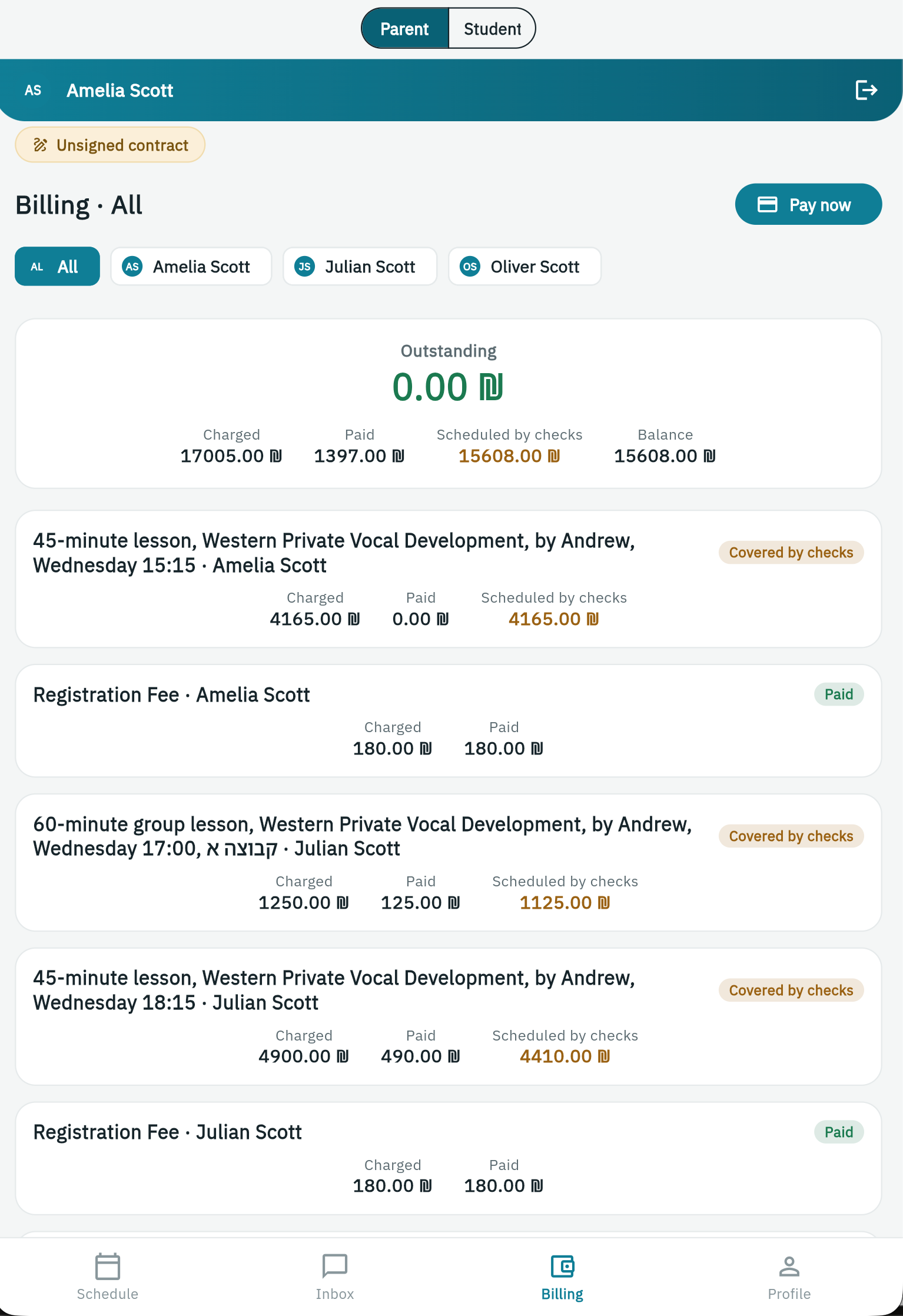
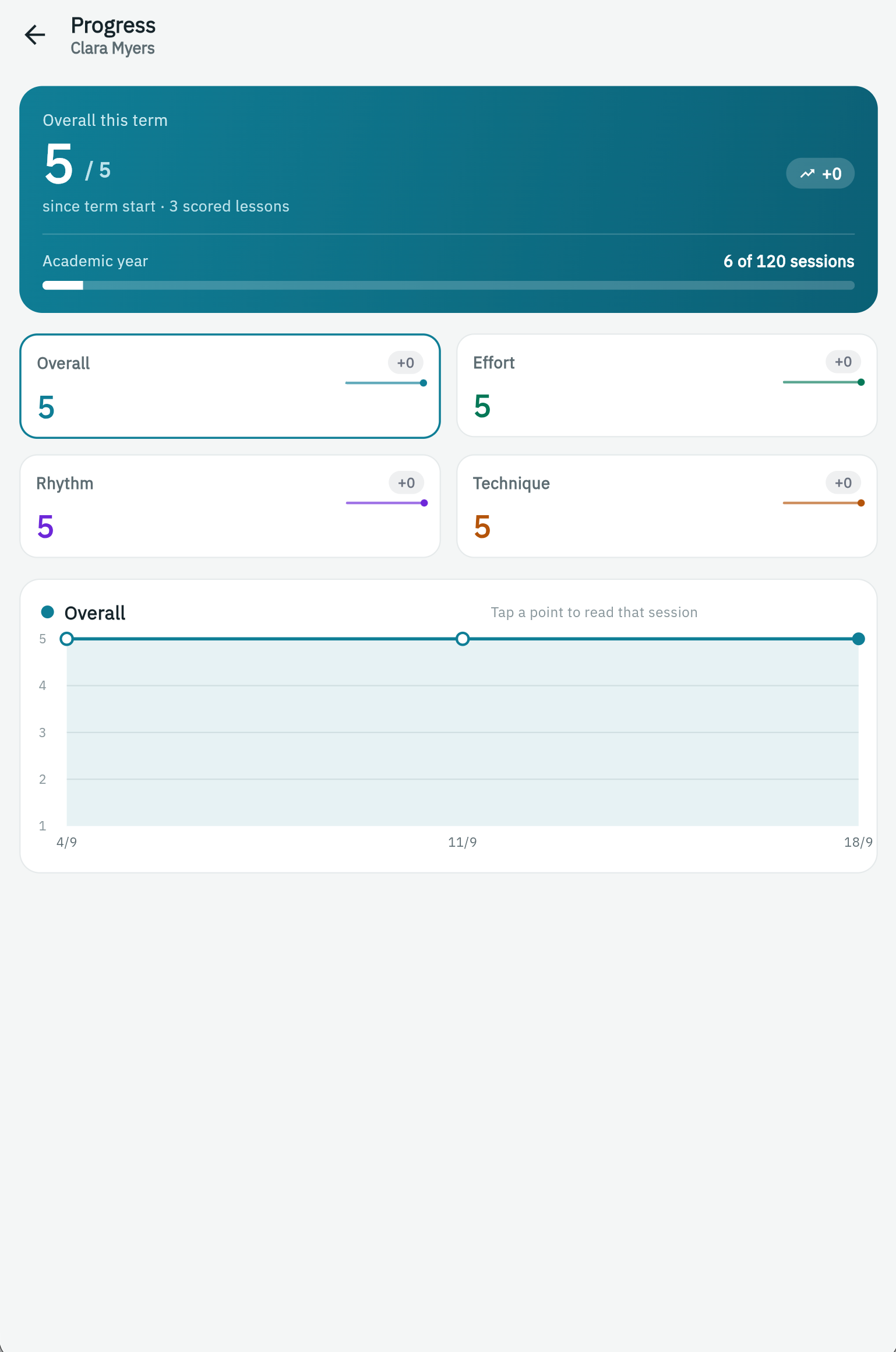
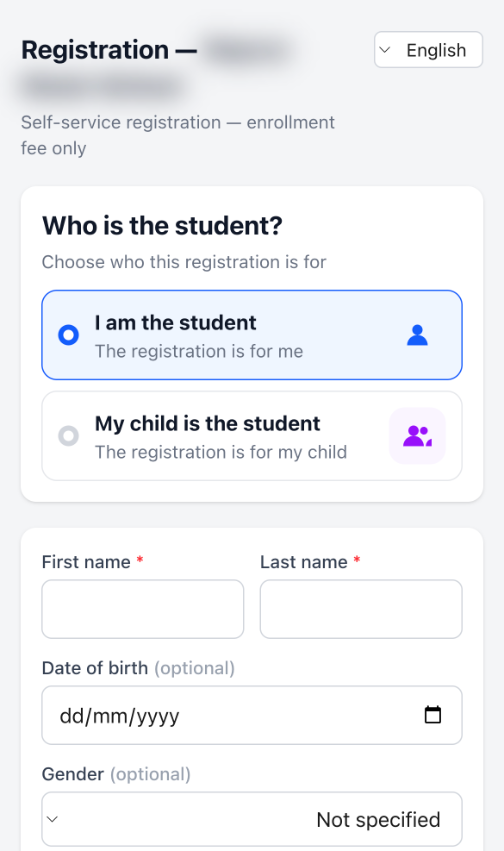
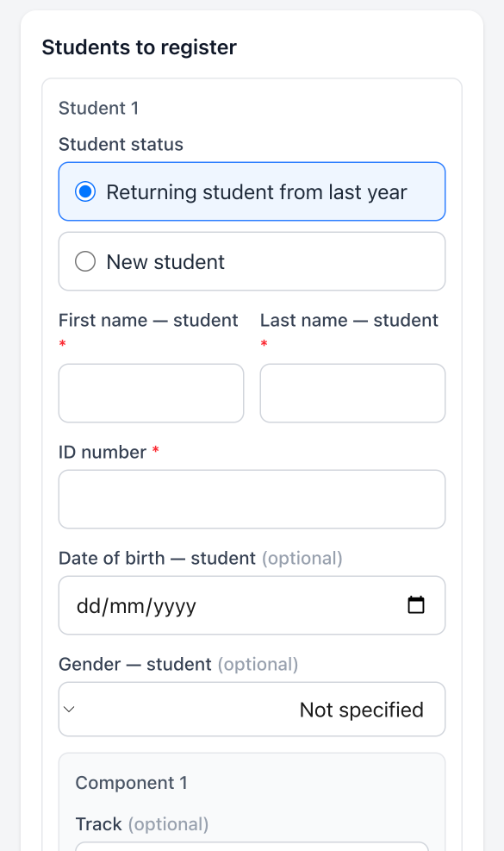
Packages, lessons, contracts, makeups and payments are now connected in one system. Instructors mark attendance and book makeups. Parents and students see their charges, lesson times, rooms and every change in their app, and pay from anywhere. The system calculates the charges, follows collection and updates payments when something changes. The office sees each family’s balance in one place and records every call and follow-up. What the system already knows, it does by itself. The managers now spend their time growing the school, opening new groups in music and art, and deciding the exceptions that need them.